

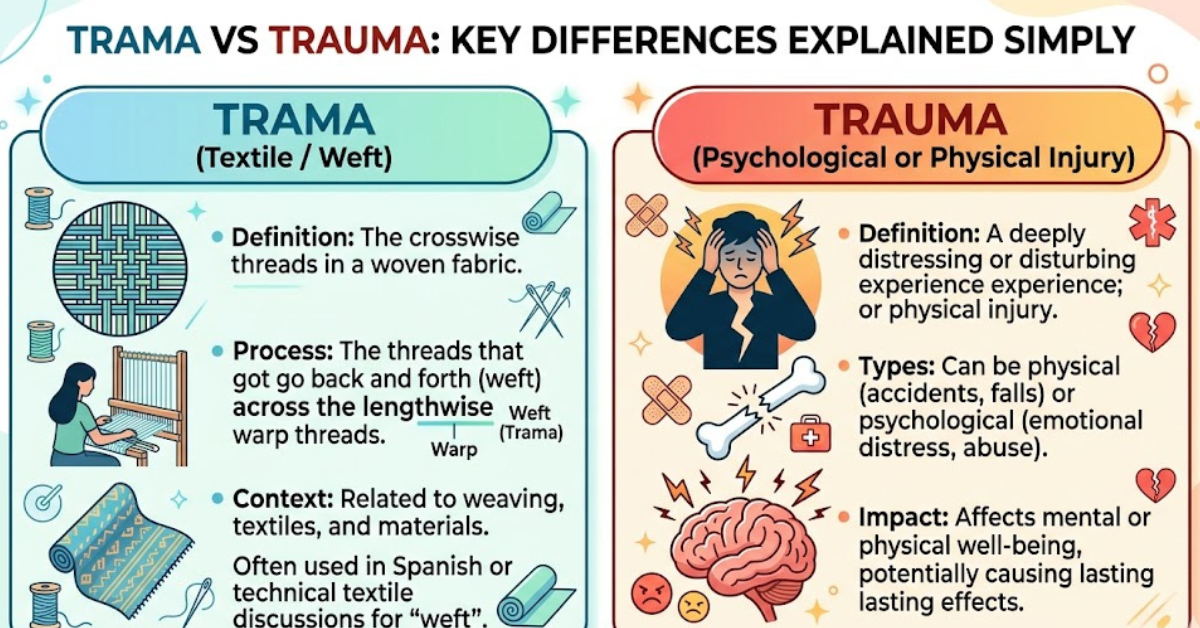
If you’ve ever come across the phrase “trama vs trauma”, you’re not alone in feeling confused. The words look similar, sound somewhat alike, and often appear in different contexts—yet they mean completely different things.
At its core, trama vs trauma is about distinguishing a storytelling term from a psychological concept that affects millions of people worldwide. While trama relates to narrative structure in some languages, trauma is a deeply important mental health term used in psychology and medicine.
In this guide, we’ll break everything down in a simple, human way so you never mix them up again.
What Does “Trama” Mean?
The word trama is commonly used in Romance languages like Spanish and Italian. In English discussions, it often appears in literary or translation contexts.
Trama in Literature and Language
In most cases, trama refers to:
- The plot of a story
- The sequence of events in a narrative
- The structure of a fictional or dramatic work
For example:
- “The trama of the novel was complex and full of twists.”
So, in simple terms, trama = plot or storyline.
Why People Confuse “Trama” with Trauma
The confusion usually happens because:
- The spelling is similar
- Both words appear in emotional or storytelling contexts
- Auto-correct or translation errors mix them up
But linguistically and conceptually, they are unrelated.
What Is Trauma?
Now let’s talk about the more widely used and medically significant term: trauma.
Trauma in Psychology and Health
Trauma refers to the emotional, psychological, or physical response to a deeply distressing or disturbing event.
It can result from experiences such as:
- Accidents or injuries
- Abuse or violence
- Natural disasters
- Loss of a loved one
- Severe emotional distress
Types of Trauma
Understanding trauma vs trama becomes clearer when you look at trauma categories:
1. Acute Trauma
A single overwhelming event, such as a car accident.
2. Chronic Trauma
Repeated and prolonged exposure to distress, such as ongoing abuse.
3. Complex Trauma
Multiple traumatic events, often during childhood or long-term situations.
Trama vs Trauma: Key Differences
Let’s break it down simply:
| Aspect | Trama | Trauma |
| Meaning | Story plot or narrative structure | Psychological or emotional injury |
| Field | Literature, language | Psychology, medicine |
| Usage | Fiction, storytelling | Mental health, therapy |
| Impact | Creative and structural | Emotional and behavioral |
So when comparing trama vs trauma, the difference is not just spelling—it’s entirely different worlds.
Why Understanding Trauma Matters More Than Ever
While “trama” is mostly used in literature, trauma is a serious mental health condition that affects how people think, feel, and respond to life.
Common Effects of Trauma
People experiencing trauma may show:
- Anxiety or panic attacks
- Flashbacks or intrusive memories
- Emotional numbness
- Sleep disturbances
- Difficulty trusting others
In some cases, trauma can develop into PTSD (Post-Traumatic Stress Disorder).
Trauma and Daily Life
Trauma doesn’t always look dramatic. It can quietly influence:
- Relationships
- Work performance
- Self-esteem
- Physical health
That’s why mental health awareness is so important when discussing trauma vs trama.
How Language Confusion Happens Online
Search engines and social media often amplify confusion between similar words. The phrase “trama vs trauma” is a good example of how:
- Typing errors spread quickly online
- Auto-correct changes meanings unintentionally
- Translation tools mix linguistic terms
- People search based on sound, not spelling
This makes it important to clarify meanings clearly, especially in educational content.
Simple Memory Trick
Still mixing them up? Here’s an easy way to remember:
- Trama = “story drama” (plot of a story)
- Trauma = “emotional wound” (psychological impact)
One belongs to storytelling, the other belongs to mental health.
FAQs About Trama vs Trauma
1. Is “trama” an English word?
No, “trama” is not commonly used in English. It is mainly used in Spanish and Italian to mean “plot.”
2. What is the correct meaning of trauma?
Trauma is a psychological or emotional response to a deeply distressing event or experience.
3. Why do people search “trama vs trauma”?
Most people are confused by the spelling similarity or are trying to understand translation differences.
4. Can trauma affect physical health?
Yes. Trauma can impact sleep, immunity, heart health, and overall physical well-being.
5. Is trauma always related to mental illness?
Not always. Trauma is an experience; however, it can lead to mental health conditions like PTSD if untreated.
Conclusion: Trama vs Trauma Made Simple
When it comes to trama vs trauma, the difference is actually straightforward once explained clearly.
- Trama refers to a story’s plot or narrative structure.
- Trauma refers to emotional or psychological distress caused by harmful experiences.
Understanding this distinction helps avoid confusion in language, writing, and even mental health discussions. More importantly, recognizing trauma as a real and serious condition encourages empathy and awareness.
If you found this breakdown helpful, exploring more topics on language differences or mental health awareness can deepen your understanding even further.