

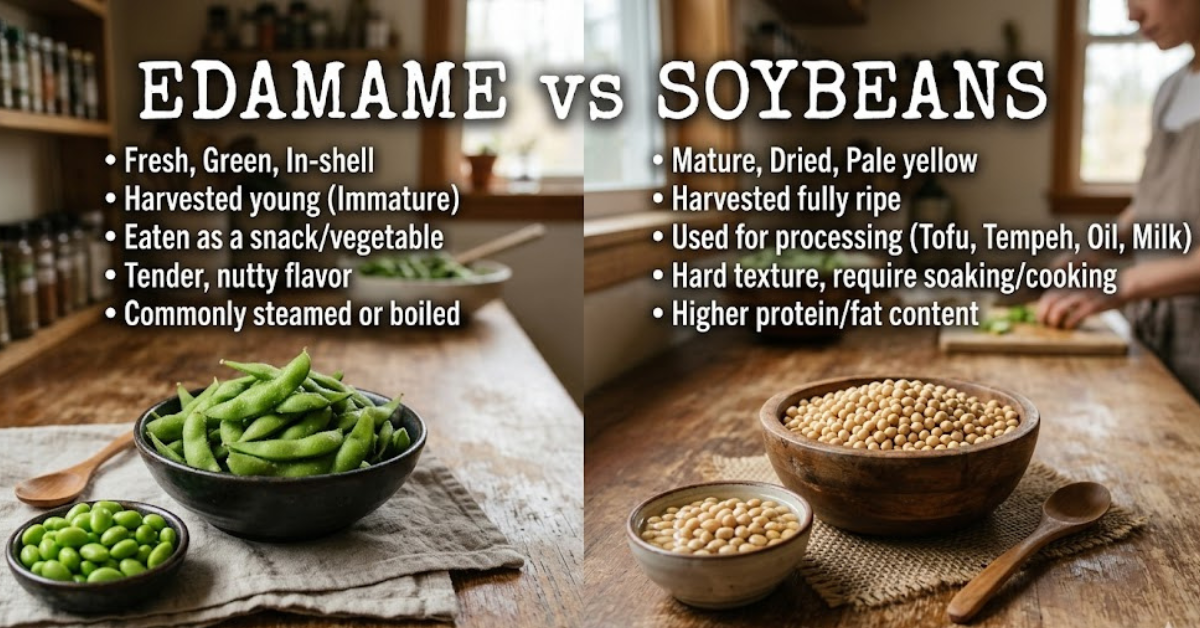
If you’ve ever wondered about edamame vs soybeans, you’re not alone. They come from the same plant, look related, and even share similar nutrients—but they’re not exactly the same food experience.
Understanding the difference between soybean vs edamame helps you make better choices for cooking, nutrition, and even snacking. Let’s break it down in a clear, practical way.
What Are Soybeans?
Soybeans are mature seeds from the soybean plant (Glycine max). They are harvested when fully ripe and usually dried before use.
Key characteristics of soybeans:
- Fully matured crop
- Hard texture when raw
- Usually cooked, processed, or fermented
- Used for oil, tofu, soy milk, and animal feed
Soybeans are extremely versatile and form the base of many global plant-based foods.
What Is Edamame?
Edamame refers to young, green soybeans harvested before they fully mature.
Key characteristics of edamame:
- Harvested early while still green
- Soft texture when cooked
- Typically steamed or boiled in pods
- Common as a snack or appetizer
In simple terms: edamame = baby soybeans.
Edamame vs Soybeans: Key Differences
Although they come from the same plant, the difference lies in maturity, taste, and usage.
| Feature | Edamame | Soybeans |
| Stage | Immature | Fully mature |
| Color | Green | Beige/yellow/brown |
| Texture | Soft, tender | Hard, dense |
| Taste | Slightly sweet, fresh | Earthy, neutral |
| Usage | Snack, salads | Oil, tofu, flour |
This comparison makes the edamame vs soybeans distinction much easier to understand.
Edamame vs Soybean Nutrition
Both foods are nutrient-dense, but their profiles are slightly different due to harvest timing.
Shared nutrients:
- High-quality plant protein
- Dietary fiber
- Iron and calcium
- Magnesium and potassium
- Isoflavones (plant compounds)
Edamame nutrition highlights:
- Slightly higher vitamin C
- Lower fat content
- Easier to digest for some people
Soybean nutrition highlights:
- Higher protein concentration (dry form)
- More commonly processed into concentrated foods
- Rich source of soybean oil
When comparing edamame vs soybean nutrition, both are excellent—but used differently in diets.
Health Benefits of Both
Both edamame and soybeans are considered superfoods in plant-based nutrition.
1. Supports heart health
Soy protein may help reduce LDL cholesterol.
2. High in plant protein
Great for vegetarians and vegans.
3. Supports bone health
Contains calcium, magnesium, and phosphorus.
4. May support hormone balance
Soy contains natural plant estrogens called isoflavones.
How They Are Used in Food
Edamame uses:
- Steamed snack with salt
- Salad toppings
- Stir-fry additions
- Sushi bowls
Soybean uses:
- Soy milk
- Tofu and tempeh
- Soy flour
- Soy oil
- Fermented foods like miso and soy sauce
Which One Should You Eat?
It depends on your goal:
- Want a quick, healthy snack → choose edamame
- Need protein for cooking or food processing → choose soybeans
- Want plant-based dairy alternatives → soybeans win
Both are nutritious, so it’s not about “better”—it’s about purpose.
Are They Interchangeable?
Not really. While they come from the same plant, you can’t substitute them directly in recipes.
- Edamame is eaten fresh
- Soybeans are usually processed or dried
So, the soybeans vs edamame choice depends on cooking method and taste preference.
Frequently Asked Questions
Is edamame just young soybeans?
Yes, edamame are immature soybeans harvested early.
Which is healthier: edamame or soybeans?
Both are healthy, but edamame is more whole and less processed, while soybeans are more protein-dense in processed forms.
Can you eat soybeans like edamame?
No, mature soybeans must be cooked or processed due to hardness and digestibility.
Why is edamame green but soybeans are not?
Because edamame is harvested before full maturity.
Are edamame and soybeans genetically different?
No, they come from the same plant species.
Conclusion
The edamame vs soybeans comparison really comes down to maturity and usage rather than being completely different foods. People eat edamame as a young, tender snack and use mature soybeans in a wide range of food products.
Both supply protein, nutrients, and health benefits, making them valuable additions to any diet. The best choice simply depends on how you want to use them in your meals.