

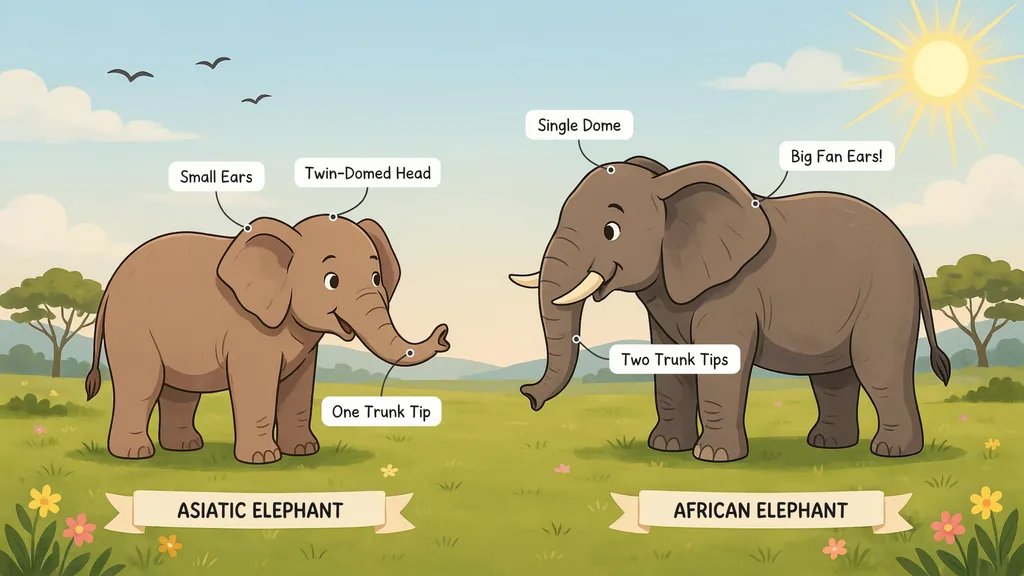
Have you ever seen an elephant? They are big, grey, and very smart. But did you know there are two main types? We have the Asiatic Elephant vs African Elephant. They look like close cousins, but they live far apart.
I love watching these animals walk through the grass or splash in the mud. Let us learn how to tell them apart. It is super fun and easy!
Size and Weight: Who is Bigger?
The African elephant is the biggest land animal on Earth. It stands very tall. The asiatic elephant vs african elephant size shows that Asian cousins are a bit smaller. An African adult weighs a lot more.
Ear Shape: The Big Clue
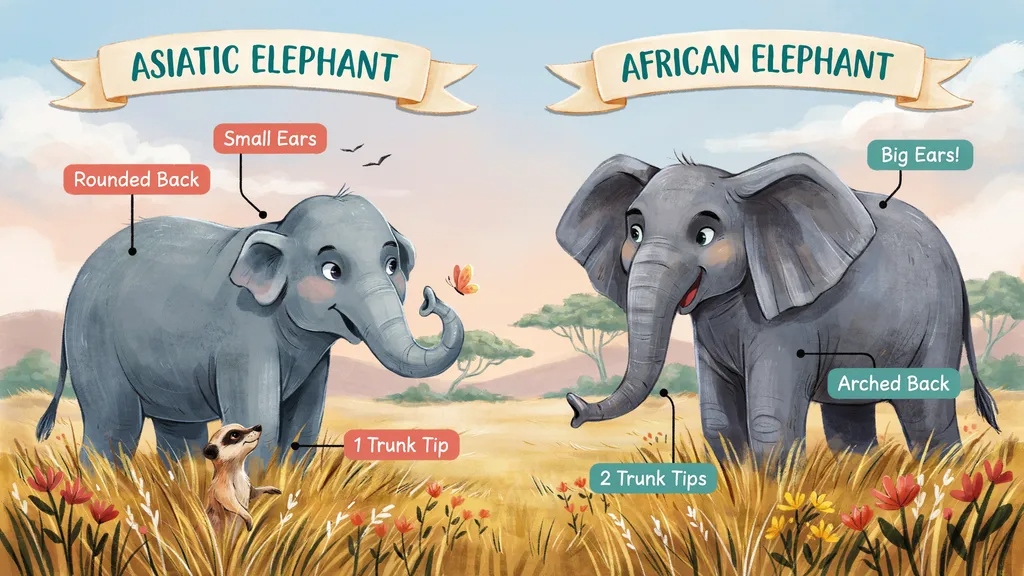
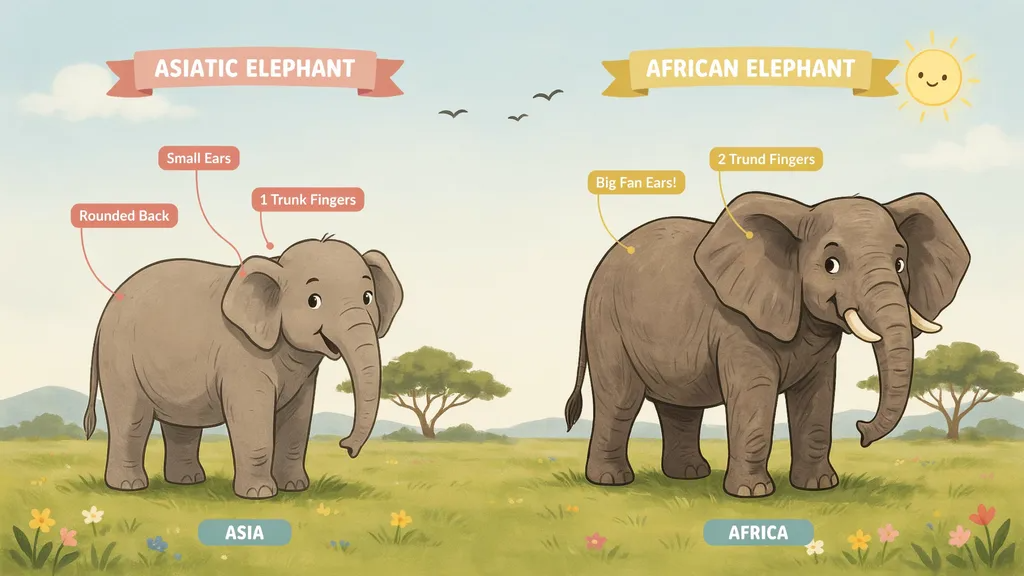
Look at the ears! African elephants have huge ears. They look like the shape of the map of Africa. Asiatic elephants have small, round ears. Their ears look neat and tidy. Big ears help African elephants stay cool in the hot sun.
The Back Shape: Saddle or Dome
Check their backs when you see them. African elephants have a dip or saddle shape on their back. Asiatic elephants have a round or curved bump on their back. This is a quick trick to spot who is who.
Trunk Tips: One Finger or Two
The trunk is a cool nose. An African elephant has two little finger-like parts at the tip. An asiatic elephant has only one finger part. They use these tips to pick up tiny leaves and snacks.
Tusks: Who Grows Them?
Both boy and girl African elephants grow long tusks. For asiatic elephants, mostly only the boys grow visible tusks. Some Asian boy elephants do not have tusks at all!
Skin Texture: Wrinkles and Lines
African elephants live in hot, dry places. Their skin is very wrinkly to hold water and stay cool. Asiatic elephants live in shady forests. Their skin is smoother and softer.
Feet and Toenails: Counting the Toes
Did you know they have different toe counts? African elephants have four toes on the front and three on the back. Asiatic elephants have five toes on the front and four on the back.
Habitat and Where They Live
African elephants roam the wild savannas and hot brush lands. Asiatic elephants love the green tropical forests of Asia. They enjoy shade and tall trees.
Diet and Food Habits
Both are plant eaters. African elephants graze on lots of grass. Asiatic elephants browse on tree bark, roots, and yummy fruits. They need tons of food every single day.
Social Life and Herds
African elephants live in huge family groups led by a wise grandma elephant. Asiatic elephant herds are smaller and cozy. Both groups love to talk with low rumbles we cannot hear.
Ao Nang Elephant Sanctuary+ 2
Quick Comparison Table
| Feature | African Elephant | Asiatic Elephant |
| Size | Larger and heavier | Smaller and lighter |
| Ear Size | Huge, shaped like Africa | Smaller, rounded |
| Trunk Tip | Two fingers | One finger |
| Back Shape | Saddle or concave | Curved or convex |
| Front Toenails | Four | Five |
| Tusks | Males and females | Mostly males only |
Frequently Asked Questions
Which elephant is bigger, the Asian or African?
The African elephant is much bigger and heavier than the Asian elephant.
How do you tell them apart by their ears?
African elephants have huge fan ears shaped like Africa. Asian elephants have small round ears.
Do female elephants have tusks?
Female African elephants have tusks. Female Asian elephants usually do not.
How many fingers are on their trunks?
African elephants have two finger parts on the tip. Asian elephants have only one.
Where do Asian elephants live?
They live in the tropical forests and grasslands of South and Southeast Asia.
Are both types of elephants endangered?
Yes, both need our help and protection to stay safe in the wild.
Conclusion
Elephants make our wild world truly wonderful and full of life. Understanding the differences in the asiatic elephant vs african elephant allows us to appreciate how special and unique every animal is in nature. Whether roaming the sunny savannas or walking through cool green forests, these gentle giants deserve our love, respect, and protection. Let us keep learning about them, share these fun facts with our friends, and do our part to keep them safe in the wild for a very long time!