

Language changes constantly, and new slang terms often spread faster than ever thanks to social media, texting, and online culture. One word that has become increasingly common in conversations, memes, and chat messages is finna. If you’ve seen someone write “I’m finna leave” or “You finna miss the bus,” you may have wondered what it actually means.
Understanding the finna meaning can help you better interpret online conversations and modern slang. While the term is especially popular among younger generations, it has a much deeper linguistic history than many people realize. In this guide, you’ll learn what finna means, where it comes from, how to use it correctly, and why it has become such a widely recognized expression.
What Does Finna Mean?
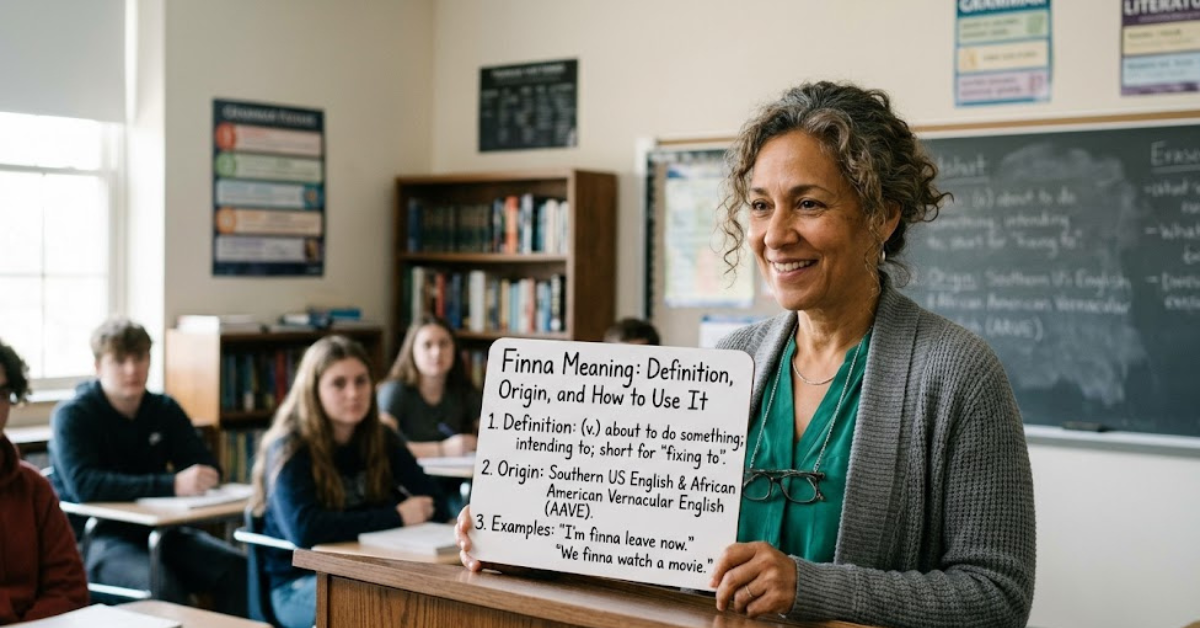
The word finna is a slang expression that means “going to” or “about to.” It is used to describe an action someone plans to do very soon.
For example:
- “I’m finna eat lunch.”
- “She’s finna call you.”
- “We finna head out.”
In each sentence, finna indicates that the action will happen shortly.
Simply put, when someone uses the word, they’re expressing immediate intention or preparation for an action.
Finna Meaning in Slang
When discussing the finna meaning slang users often encounter online, it refers to a casual and informal way of saying “about to” or “going to.”
Examples include:
- “I’m finna start my homework.”
- “You finna watch the game tonight?”
- “They finna release a new video.”
Because it is informal slang, it is generally used in conversations, text messages, social media posts, and spoken language rather than formal writing.
Finna Meaning in AAVE
The finna meaning AAVE discussions often reference its roots in African American Vernacular English (AAVE).
Linguists generally trace the term to the phrase “fixing to,” which has long been used in some Southern American dialects to mean preparing or intending to do something. Over time, pronunciation changes and language evolution contributed to the development of the modern form “finna.”
Understanding these origins is important because the word is not simply internet slang. It has a cultural and linguistic history that predates social media by many decades.
Finna Meaning Origin
Many people search for the finna meaning origin because the word seems unusual at first glance.
The evolution is commonly understood as:
- “Fixing to”
- “Fixin’ to”
- “Finna”
For example:
- “I’m fixing to leave.”
- “I’m fixin’ to leave.”
- “I’m finna leave.”
Over time, the shorter form became widely recognized in spoken language and eventually spread online.
Finna Meaning in Text and Chat
The finna meaning in text conversations is usually the same as in everyday speech: someone is about to do something.
Examples:
- “I’m finna sleep.”
- “We finna order pizza.”
- “You finna join the call?”
Similarly, the finna meaning in chat environments such as messaging apps, gaming platforms, and social media remains unchanged.
Because texting favors shorter expressions, the word fits naturally into digital communication.
What Does “I’m Finna” Mean?
The phrase I’m finna meaning is simply:
“I am about to” or “I am going to.”
Examples:
- “I’m finna study for my exam.”
- “I’m finna watch a movie.”
- “I’m finna head home.”
Likewise, im finna meaning without the apostrophe carries the exact same meaning and is often seen in informal texting.
What Does “You Finna” Mean?
The you finna meaning can be translated as:
“You are about to” or “You are going to.”
Examples:
- “You finna finish that?”
- “You finna be late.”
- “You finna regret that decision.”
The phrase is often used in casual conversation, playful teasing, or predictions about someone’s actions.
What Does “I Finna” Mean?
The i finna meaning is essentially the same as “I’m finna,” although it may appear without proper grammar in text messages or social media comments.
Examples:
- “I finna go.”
- “I finna eat.”
- “I finna call her.”
In standard English, many speakers would naturally say “I’m finna” instead.
What Does “We Finna” Mean?
The we finna meaning translates to:
“We are about to” or “We are going to.”
Examples:
- “We finna leave now.”
- “We finna celebrate tonight.”
- “We finna start the project.”
It indicates a group’s immediate intention to do something.
What Does “I’m Not Finna” Mean?
The phrase I’m not finna meaning is used to express refusal, unwillingness, or a firm decision not to do something.
Examples:
- “I’m not finna argue about this.”
- “I’m not finna wait all day.”
- “I’m not finna spend that much money.”
In these cases, the speaker is making it clear they do not intend to perform the action.
What Does “Ain’t Finna” Mean?
The phrase ain’t finna meaning is similar but often stronger in tone.
Examples:
- “I ain’t finna do that.”
- “She ain’t finna change her mind.”
- “They ain’t finna stop now.”
It generally communicates that something is not going to happen or that someone refuses to do something.
Finna Meaning Gen Z Usage
Although the word existed long before social media, the finna meaning Gen Z users recognize today has become more visible through platforms such as TikTok, Instagram, X, and online messaging.
Gen Z frequently uses the term because it is:
- Short
- Conversational
- Easy to type
- Familiar in online culture
Examples:
- “I’m finna post this.”
- “We finna go viral.”
- “You finna see something crazy.”
Its popularity online has introduced the term to audiences worldwide.
Finna Meaning Examples
Here are some practical examples showing how the word is used in everyday communication:
Everyday Conversation
- “I’m finna grab some coffee.”
- “We’re finna leave in five minutes.”
- “She’s finna start her new job.”
Text Messages
- “Finna go to sleep.”
- “I’m finna call you.”
- “You finna hop online?”
Social Media
- “Finna have the best weekend ever.”
- “We finna make this happen.”
- “I’m finna post the photos now.”
When Should You Use Finna?
You can use the term when:
- Speaking casually with friends
- Sending text messages
- Posting on social media
- Participating in informal conversations
You should generally avoid it in:
- Academic writing
- Professional reports
- Business emails
- Formal presentations
In formal settings, “going to” or “about to” is usually more appropriate.
Common Mistakes People Make
Some people misunderstand the word and assume it means:
- “Finished”
- “Finally”
- “Found”
These interpretations are incorrect.
Remember that the term primarily expresses a future action that is expected to happen soon.
Frequently Asked Questions
Is finna a real word?
Yes. It is a recognized slang term with established usage and documented linguistic roots, particularly within AAVE.
Does finna mean going to?
Yes. In most contexts, it means “going to” or “about to.”
Is finna grammatically correct?
It is considered correct within informal speech and the dialects where it originates, but it is generally not used in formal writing.
What is the difference between finna and gonna?
Both refer to future actions. However, “gonna” simply means “going to,” while “finna” often emphasizes that something is about to happen very soon.
Can I use finna in professional emails?
It is best not to. Formal communication usually calls for standard English expressions such as “going to” or “about to.”
Why is finna popular online?
Its brevity, conversational tone, and widespread use on social media have helped it become a common internet expression.
Conclusion
The finna meaning is straightforward: it typically means “going to” or “about to.” While many people encounter it through social media and texting, the term has deep roots in African American Vernacular English and evolved from the phrase “fixing to.”
Whether you’re reading messages, scrolling through social media, or chatting with friends, understanding this expression makes modern communication easier to follow. As language continues to evolve, words like “finna” demonstrate how cultural influence, regional speech, and digital communication shape the way people speak and write today.
If you’re interested in learning more modern slang, texting abbreviations, and commonly misunderstood expressions, exploring related language guides can help expand your understanding of today’s evolving vocabulary.