

Laundry symbols can feel like a secret code, and one of the most confusing ones is tumble dry low meaning. If you’ve ever pulled out a clothing tag and wondered what it actually wants from you, you’re not alone.
The tumble dry low meaning simply refers to drying clothes in a machine at a low heat setting. It’s designed to protect delicate fabrics from shrinking, stretching, or getting damaged by high temperatures. But there’s a bit more to it than just pressing a button on your dryer.
In this guide, we’ll break everything down in plain, practical language so you’ll never second-guess your laundry settings again.
What Does Tumble Dry Low Mean?
When people ask what does tumble dry low mean, they’re usually trying to figure out if it’s safe for their clothes.
In simple terms, it means:
- Clothes should be dried in a tumble dryer
- The heat setting must be kept low
- The cycle uses gentle heat and slower drying intensity
This setting is commonly used for fabrics like cotton blends, light synthetics, activewear, and delicate clothing that can’t handle high heat.
So if you’re wondering what is tumble dry low, think of it as a “safe drying mode” that reduces heat damage while still using the convenience of a dryer.
Understanding the Tumble Dry Low Symbol
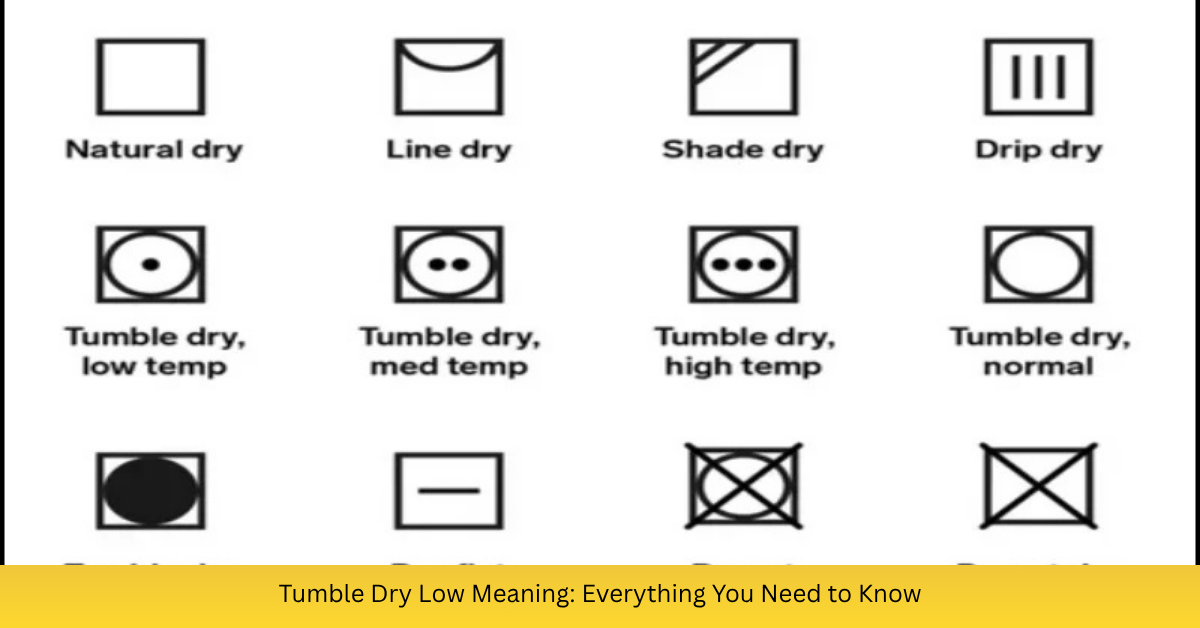
The tumble dry low symbol is usually shown as a square with a circle inside and one dot.
Here’s how to read it:
- One dot inside = low heat
- Two dots = medium heat
- Three dots = high heat
- Crossed symbol = do not tumble dry
This symbol helps you quickly identify the correct drying method without needing to read long instructions. Once you recognize it, laundry becomes much easier.
What Setting Is Tumble Dry Low on a Dryer?
Many people struggle with figuring out what setting is tumble dry low on their machine.
Most modern dryers label it as:
- “Low Heat”
- “Delicates”
- “Gentle Dry”
- “Air Fluff (Low Heat option in some models)”
If your dryer doesn’t explicitly say “tumble dry low setting,” don’t worry. The tumble dry low setting on dryer is usually equivalent to the delicate or low heat cycle.
How to Tumble Dry Low Properly
If you’re unsure how to tumble dry low, follow these simple steps:
Step-by-step guide:
- Sort clothes by fabric type
- Check clothing labels for drying instructions
- Load the dryer (don’t overload it)
- Select low heat or delicate cycle
- Start the cycle and remove clothes promptly
This helps maintain fabric quality and prevents unnecessary wear and tear.
Is Tumble Dry Low the Same as Delicate?
A very common question is whether is tumble dry low the same as delicate.
The short answer: they are very similar, but not always identical.
- Tumble dry low focuses on heat level
- Delicate cycle often includes slower tumbling + low heat
So while they overlap, delicate mode is usually gentler overall. If your clothes are very sensitive (like lace or silk blends), delicate is often the safer choice.
Does Tumble Dry Low Mean No Heat?
A lot of confusion comes from asking does tumble dry low mean no heat.
The answer is no.
It still uses heat, just at a low temperature. The goal is to:
- Reduce shrinkage
- Protect fibers
- Avoid fabric damage
If you want no heat at all, you should use “air dry” or “air fluff” instead.
My Dryer Doesn’t Have Tumble Dry Low — What Now?
If you’re thinking my dryer doesn’t have tumble dry low, don’t panic.
You can still achieve the same result by:
- Using “delicate” mode
- Selecting the lowest heat option manually
- Reducing drying time and checking clothes early
- Air drying sensitive items instead
Older dryers or basic models often skip labeling, but the function is usually still there in some form.
Why Tumble Dry Low Matters
Using the correct setting isn’t just about convenience—it directly impacts your clothes.
Here’s why it matters:
- Prevents shrinkage in cotton fabrics
- Reduces fading and wear
- Extends clothing lifespan
- Keeps elasticity in activewear
- Protects prints and embroidery
In short, using tumble dry low setting correctly saves money by making your clothes last longer.
Common Mistakes to Avoid
Even if you understand what does tumble dry low mean on a dryer, mistakes still happen.
Avoid these:
- Overloading the dryer
- Ignoring clothing labels
- Mixing heavy and light fabrics
- Leaving clothes inside after drying
- Using high heat “just to save time”
These small habits can significantly damage your wardrobe over time.
Quick Comparison: Drying Settings
Here’s a simple breakdown:
- Low Heat (Tumble Dry Low): Best for delicate or light fabrics
- Medium Heat: Everyday cottons and blends
- High Heat: Towels, jeans, heavy fabrics
- No Heat (Air Dry): Very delicate items
FAQs About Tumble Dry Low Meaning
1. What does tumble dry low mean in simple words?
It means drying clothes in a machine using low heat to prevent damage and shrinkage.
2. Is tumble dry low safe for all clothes?
No. It’s safe for most everyday fabrics, but very delicate items may still require air drying.
3. Can I replace tumble dry low with air dry?
Yes, but air drying takes longer and doesn’t use heat at all.
4. What happens if I ignore tumble dry low instructions?
Your clothes may shrink, lose shape, or wear out faster due to high heat.
5. Is delicate cycle the same as tumble dry low?
They are similar, but delicate is usually gentler overall with slower tumbling.
Conclusion
Understanding tumble dry low meaning makes laundry much easier and helps protect your clothes from unnecessary damage. In simple terms, it’s a low-heat drying setting designed to keep fabrics safe, soft, and long-lasting.
Next time you see the tumble dry low symbol, you’ll know exactly what to do—and more importantly, what your clothes need.
If you found this guide helpful, you might also want to explore more laundry care tips or fabric care symbols to become fully confident in managing your wardrobe.